


All
Thought leadership series
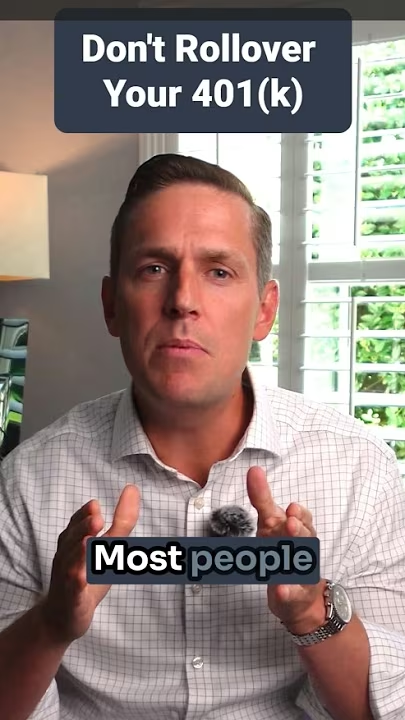
Retiring early? Be careful before rolling over your 401k. Here's what to know about the Rule of 55.
Should I roll over my 401(k) after leaving my job? Maybe. But if you’re retiring before age 59½, don’t automatically roll it into an IRA. You could accidentally give up an important early-retirement option. It’s called the Rule of 55. If you leave your employer during or after the calendar year you turn 55, you may be able to take withdrawals directly from that employer’s 401(k) without the normal 10% early-withdrawal penalty. You’ll still owe ordinary income taxes on taxable withdrawals, but avoiding that additional 10% penalty can make a big difference if you need access to the money before 59½. The problem is what happens when you immediately roll that 401(k) into an IRA. The Rule of 55 generally doesn’t apply to IRAs. So a rollover that seems like a routine financial decision could eliminate one of the ways you planned to fund the first few years of an early retirement. That doesn’t mean you should never roll over an old 401(k). There can be plenty of good reasons to do it. It just means the timing of that rollover matters. Before moving the money, look at your age, when you left the employer, what other accounts you have available, and how you plan to fund the years before 59½. A rollover can always happen later. Make sure you understand what you may be giving up before you do it. Want to learn more about whether you should roll over your 401(k)? Click the link in our bio.





Osaic Wealth Form CRS
Securities and investment advisory services are offered through Osaic Wealth, Inc., member FINRA/SIPC and a registered investment advisor. Additional investment advisory services offered through Strategic Financial Advisors Corporation, a registered investment advisor. Strategic Financial Advisors Corporation and Strategic Financial Services Corporation are not affiliated with Osaic Wealth, Inc.
This communication is strictly intended for individuals residing in states where the contracted representative is licensed. No offers may be made or accepted from any resident outside the specific state(s) the representative is registered. Current registered states: AZ, CA, CO, CT, DE, FL, GA, KY, MD, NJ, NM, NY, NC, PA, SC, TN, TX, VA. Please contact us to determine the states in which each representative is registered.
Broadridge Investor Communication Solutions, Inc. does not provide investment, tax, or legal advice. The information presented here is not specific to any individual’s personal circumstances.
To the extent that this material concerns tax matters, it is not intended or written to be used, and cannot be used, by a taxpayer for the purpose of avoiding penalties that may be imposed by law. Each taxpayer should seek independent advice from a tax professional based on his or her individual circumstances. Osaic Wealth, Inc. does not provide tax or legal advice.
These materials are provided for general information and educational purposes based upon publicly available information from sources believed to be reliable—we cannot assure the accuracy or completeness of these materials. The information in these materials may change at any time and without notice.
Certified Financial Planner Board of Standards, Inc. (CFP Board) owns the CFP® certification mark, the CERTIFIED FINANCIAL PLANNER™ certification mark, and the CFP® certification mark (with plaque design) logo in the United States, which it authorizes use of by individuals who successfully complete CFP Board’s initial and ongoing certification requirements.
PLEASE NOTE: The information being provided is strictly as a courtesy. When you link to any of the websites provided here, you are leaving this website. We make no representation as to the completeness or accuracy of information provided at these websites. The company is not liable for any direct or indirect technical or system issues or any consequences arising out of your access to, or use of third-party technologies, websites, information, and programs made available through this website. When you access one of these websites, you are leaving our website and assume total responsibility and risk for your use of the websites you are linking to.